

Samsung Refrigerator Smell? Here’s What To Do.
Even if you wipe away spills and remove spoiled food, refrigerator odor has a way of persisting. Why does your Samsung refrigerator stink? One main reason is that smelly bacteria can remain behind even after the source of the odor is gone. Use these cleaning tips to eliminate odors and prevent their return when your Samsung refrigerator smells.
Attack Odor at The Source When Your Samsung Refrigerator Smells
Effectively removing refrigerator odor requires an in-depth cleaning with the right supplies and techniques. The following step-by-step guide outlines simple yet effective methods for dispelling odors. But first, knowing why your Samsung refrigerator smells can help prevent its return.
Why Does My Samsung Refrigerator Stink?
While a smelly refrigerator is often due to spills and spoiled food, other factors can be responsible for bad smells.
The following situations can also result in a Samsung refrigerator odor:
- Food is improperly sealed: Open containers and food that isn’t sufficiently wrapped will cause a persistent refrigerator odor. Food will also spoil more quickly, creating more unpleasant odors.
- The refrigerator is overstocked: Squeezing too many items in the refrigerator reduces the air circulation that can disperse bad smells. Items are also more likely to block air vents or open and spoil, making odors worse.
- Bacteria in the drain tray: Lingering food particles can find their way into the tray and develop smelly bacteria and mold, resulting in a pervasive odor outside the refrigerator.
- Lack of regular cleanings: Letting more than 3 or 4 months pass without cleaning your refrigerator can allow mold growth and unpleasant odors.
How to Clean a Samsung Refrigerator
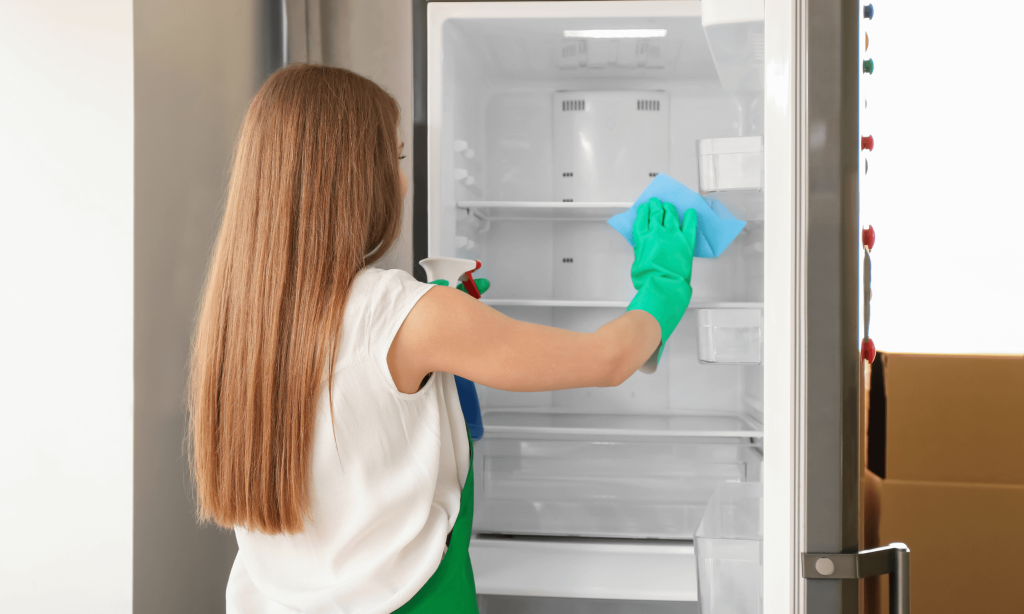
When your Samsung refrigerator smells, the only way to eliminate the odor is through a thorough cleaning. This requires removing all food and using targeted cleaning methods both inside and outside the refrigerator.
Here’s how to clean a Samsung refrigerator interior:
- Turn off the power to the refrigerator.
- Remove all food, disposing of items that are spoiled or insufficiently contained.
- Wipe away visible stains and spills with a damp cloth.
- Use a separate damp cloth to wipe down the rubber door seals.
- Remove the interior drawers and shelves and wipe them down with a mixture of water and dish soap. Alternatively, use a solution of 1 quart of hot water and 2 Tablespoons of baking soda. Wipe down the walls of the refrigerator as well.
- Dry the inside with a clean cloth and leave the doors open for at least 30 minutes to allow the refrigerator to air out.
- Replace food and restore the refrigerator’s power.
Bacteria that accumulate in the refrigerator’s drain pan are a common reason your refrigerator smells bad from the outside. Follow these steps to clean the drain pan and eliminate exterior odor:
- Turn off the power to the refrigerator.
- Move the refrigerator away from the wall.
- Remove the refrigerator’s rear panel to access the drain pan.
- Attach cleaning wipes to the end of a long, flexible cleaning brush.
- Insert the brush into the opening to clean the drain pan, replacing the wipes as needed.
- Replace the panel, reposition the refrigerator, and restore power.
If odor persists and your refrigerator won’t cool properly, it’s possible the condenser coils need cleaning. When the coils become too dirty, the condenser has to work harder, which can sometimes create a burning smell. Refer to your user manual to determine the correct method for cleaning the coils on your specific model refrigerator.
Refrigerator Odor Prevention Tips
Once you’ve removed any unpleasant odors, regular maintenance is essential to keeping them away.
Use these odor prevention tips to keep bad smells at bay:
- Clean the interior regularly: Repeating the above cleaning steps every 3-4 months can prevent the development of smelly bacteria.
- Use an odor eliminator: Placing an odor eliminator in your refrigerator can help absorb unpleasant odors. What’s the best refrigerator odor eliminator? An open container of baking soda is highly effective. A pan of coffee grinds, active charcoal, or crumpled newspapers can also absorb bad smells.
- Store food properly: Ensure containers are entirely closed and airtight. Label and date your food to prevent spoilage. Lastly, store fresh foods towards the front of the fridge so their easy visibility promotes use before they spoil.
If your Samsung refrigerator smells even after a thorough cleaning, a refrigerator repair service should assess the problem. Before that, contact our Appliance Parts King wizards to troubleshoot the issue before you start making any repairs.
Tags:


applianceparts